Wednesday, June 18, 2014

The Collapsing Obama Doctrine

In 1983, President Ronald Reagan said, "If history teaches anything, it teaches that simple-minded appeasement or wishful thinking about our adversaries is folly. It means the betrayal of our past, the squandering of our freedom." President Obama is on track to securing his legacy as the man who betrayed our past and squandered our freedom.


As the terrorists of the Islamic State of Iraq and Syria (ISIS) threaten Baghdad, thousands of slaughtered Iraqis in their wake, it is worth recalling a few of President Obama's past statements about ISIS and al Qaeda. "If a J.V. team puts on Lakers' uniforms that doesn't make them Kobe Bryant" (January 2014). "[C]ore al Qaeda is on its heels, has been decimated" (August 2013). "So, let there be no doubt: The tide of war is receding" (September 2011).

Rarely has a U.S. president been so wrong about so much at the expense of so many. Too many times to count, Mr. Obama has told us he is "ending" the wars in Iraq and Afghanistan—as though wishing made it so. His rhetoric has now come crashing into reality. Watching the black-clad ISIS jihadists take territory once secured by American blood is final proof, if any were needed, that America's enemies are not "decimated." They are emboldened and on the march.

The fall of the Iraqi cities of Fallujah, Tikrit, Mosul and Tel Afar, and the establishment of terrorist safe havens across a large swath of the Arab world, present a strategic threat to the security of the United States. Mr. Obama's actions—before and after ISIS's recent advances in Iraq—have the effect of increasing that threat.

On a trip to the Middle East this spring, we heard a constant refrain in capitals from the Persian Gulf to Israel, "Can you please explain what your president is doing?" "Why is he walking away?" "Why is he so blithely sacrificing the hard fought gains you secured in Iraq?" "Why is he abandoning your friends?" "Why is he doing deals with your enemies?"

In one Arab capital, a senior official pulled out a map of Syria and Iraq. Drawing an arc with his finger from Raqqa province in northern Syria to Anbar province in western Iraq, he said, "They will control this territory. Al Qaeda is building safe havens and training camps here. Don't the Americans care?"

Our president doesn't seem to. Iraq is at risk of falling to a radical Islamic terror group and Mr. Obama is talking climate change. Terrorists take control of more territory and resources than ever before in history, and he goes golfing. He seems blithely unaware, or indifferent to the fact, that a resurgent al Qaeda presents a clear and present danger to the United States of America.

When Mr. Obama and his team came into office in 2009, al Qaeda in Iraq had been largely defeated, thanks primarily to the heroic efforts of U.S. armed forces during the surge. Mr. Obama had only to negotiate an agreement to leave behind some residual American forces, training and intelligence capabilities to help secure the peace. Instead, he abandoned Iraq and we are watching American defeat snatched from the jaws of victory.

The tragedy unfolding in Iraq today is only part of the story. Al Qaeda and its affiliates are resurgent across the globe. According to a recent Rand study, between 2010 and 2013, there was a 58% increase in the number of Salafi-jihadist terror groups around the world. During that same period, the number of terrorists doubled.

In the face of this threat, Mr. Obama is busy ushering America's adversaries into positions of power in the Middle East. First it was the Russians in Syria. Now, in a move that defies credulity, he toys with the idea of ushering Iran into Iraq. Only a fool would believe American policy in Iraq should be ceded to Iran, the world's largest state sponsor of terror.

This president is willfully blind to the impact of his policies. Despite the threat to America unfolding across the Middle East, aided by his abandonment of Iraq, he has announced he intends to follow the same policy in Afghanistan.

Despite clear evidence of the dire need for American leadership around the world, the desperation of our allies and the glee of our enemies, President Obama seems determined to leave office ensuring he has taken America down a notch. Indeed, the speed of the terrorists' takeover of territory in Iraq has been matched only by the speed of American decline on his watch.


The president explained his view in his Sept. 23, 2009, speech before the United Nations General Assembly. "Any world order," he said, "that elevates one nation above others cannot long survive." Tragically, he is quickly proving the opposite—through one dangerous policy after another—that without American pre-eminence, there can be no world order.

It is time the president and his allies faced some hard truths: America remains at war, and withdrawing troops from the field of battle while our enemies stay in the fight does not "end" wars. Weakness and retreat are provocative. U.S. withdrawal from the world is disastrous and puts our own security at risk.
Al Qaeda and its affiliates are resurgent and they present a security threat not seen since the Cold War.

Defeating them will require a strategy—not a fantasy. It will require sustained difficult military, intelligence and diplomatic efforts—not empty misleading rhetoric. It will require rebuilding America's military capacity—reversing the Obama policies that have weakened our armed forces and reduced our ability to influence events around the world.

American freedom will not be secured by empty threats, meaningless red lines, leading from behind, appeasing our enemies, abandoning our allies, or apologizing for our great nation—all hallmarks to date of the Obama doctrine. Our security, and the security of our friends around the world, can only be guaranteed with a fundamental reversal of the policies of the past six years.

In 1983, President Ronald Reagan said, "If history teaches anything, it teaches that simple-minded appeasement or wishful thinking about our adversaries is folly. It means the betrayal of our past, the squandering of our freedom." President Obama is on track to securing his legacy as the man who betrayed our past and squandered our freedom.


Full article in new window

Obama’s Criminal Negligence in Iraq

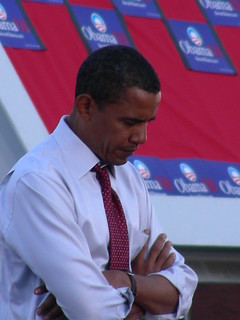
Barack Obama
Barack Obama (Photo credit: jamesomalley)
Truth.... He has disgraced his office, our nation, and rendered meaningless the sacrifice of thousands of American lives. Men and women who died so that we may live. Shame on you Obama! Shame for all time!!!


President Barack Obama came to office promising to “bring a responsible end to the war in Iraq.” That should have been easy enough to do, considering the war was already over. Alas, he seems to have had in mind something quite different than “ending a war.” Perhaps because of his general bias against exertions of American power, Obama seems to have convinced himself that our continuing military presence in post-war Iraq was the same as continuing the war.


That should have been easy enough to do, considering the war was already over. Alas, he seems to have had in mind something quite different than “ending a war.” Perhaps because of his general bias against exertions of American power, Obama seems to have convinced himself that our continuing military presence in post-war Iraq was the same as continuing the war.

This novel conception of when wars end suggests Obama may yet pull our forces out of Europe and the Far East in order to “end” World War II. It also helps to explain how he came to equate “responsibly ending the war in Iraq” with throwing away everything we had gained from it. Obama made it plain from the start that he saw no reason to keep investing in a mistake. He let our military presence in Iraq lapse, and left the Iraqi government to fend for itself when it was still far too fragile. There is a reason we stayed in Germany and Japan and South Korea for decades after the fighting stopped: We didn’t want our sacrifices to be for nothing, and we didn’t want to have to fight again.

Now the Islamic State of Iraq and the Levant, or ISIS — the very al-Qaeda forces we defeated in Iraq in 2007 — have come back and taken over huge swaths of the country, including most of the Sunni heartland to the west and north of Baghdad. Meanwhile, over in next-door Syria, Obama stood by while the rebels fighting Bashar Assad came under the dominance of extreme Islamist forces, and then sold them all out with the chemical-weapons deal in September 2013. Consequently, we have thrown the Iraqi government into a de facto alliance with the murderous Baathist regime in Syria — a feat that not even common enemies and a common ideology could achieve during Saddam’s rule — and now both governments find themselves increasingly dependent on Iran.

With Iran’s power and prestige thus enhanced, and rapidly filling the vacuum left behind by the U.S., the mullahs now see the possibility at long last of extending the Islamic Revolution across the Fertile Crescent. With our impending agreement to let Iran keep its nuclear-weapons programs, we can now settle comfortably into the role of a de facto subordinate ally of Iran, whose forces we may soon be helping with air strikes in Iraq. If you’re wondering where that leaves our actual allies among the Gulf kingdoms and Israel, they are wondering the same thing.

Foreign-policy mistakes are inevitable, and should generally be expected, if not always forgiven. But in its approach to Iraq and the Middle East as a whole, the Obama administration has been criminally negligent. It could be years and maybe decades before we see a situation as good as the one Obama found when he got to office — and things are almost certainly going to get far worse before they get better.

By the time he got to the White House in early 2009, Obama should have realized that the war in Iraq was already over, and that we had won. Exactly two years earlier, the Iraqi security forces were reaching critical mass, simultaneous with the start of America’s own surge, and the Sunni tribes of Anbar province were all coming over to the U.S. side. By the summer of 2007, when I was embedded in Iraq, U.S. and Iraqi forces had utterly defeated al-Qaeda’s Iraqi offshoot, ISIS, in a series of massive joint operations. The following year, the Shiite prime minister Nouri al-Maliki personally orchestrated the offensive that crushed the Iranian-backed militias collected in and around Basra in southern Iraq.

U.S. casualties in Iraq were close to levels commensurate with peacetime training activities back home, and a tenuous but real peace reigned over the whole country. Obama inherited from the Bush administration the framework agreement for a long-term alliance with Iraq, as well as a status-of-forces agreement that set December 2011 as a tentative withdrawal date for all U.S. forces. Iraqi politics were dominated by a Shiite-led coalition that overtly favored an ongoing alliance with the United States. In the press, Shiite militias accused each other of being under Iranian control.

At that point, the U.S. was exerting an enormously beneficial and calming influence on Iraqi politics. Sunnis who felt abused by the majority Shiite government could appeal to the Americans for help, while Shiites could remonstrate to the Americans about Sunni intransigence. Both could get results — peacefully — through America’s good offices. In a country where no faction trusted any of the others, all factions could trust the Americans to be impartial, for the simple reason that we were impartial. More important, to invoke the title of Bing West’s great book, we were the strongest tribe.

This central position allowed the various factions of Iraqi politics to embrace an alliance with the United States, instead of being forced to seek the protection of coreligionists in Saudi Arabia or Iran whose real agenda was the continuation of a Wahhabi-Iranian proxy war inside Iraq. This is something that Iraqis constantly commented on in their own press, but which Americans by and large never understood: In toppling the tyranny of Saddam Hussein, the U.S. had opened the door to a proxy war between the Wahhabi extremists of Saudi Arabia, Qatar, and other Arab states and the Shiite extremists of Khomeini’s revolution in Iran. That war proved far bloodier than America’s counterinsurgency campaign. In fact, the purpose of the counterinsurgency campaign in Iraq was to defeat both sides in the proxy war, so that our newfound allies in the government of Iraq could cement their power and forge a lasting government.

Hence, America’s continuing military presence allowed U.S. military officers and diplomats to exert enormous influence both within Iraq and in the broader Middle East. It allowed us to keep the peace among Iraqi factions while simultaneously diminishing Iranian and Wahhabi Arab influence. We had gained, at a frightful cost in lives and treasure, a priceless strategic asset, namely the possibility of Iraq as a strong military ally, hosting U.S. forces as long as we needed to keep them there, engaged against the extremists in Syria and Iran, as well as al-Qaeda, the Muslim Brotherhood, and their sympathizers among the Arab states. And the prospect of a successful democracy (however rudimentary and corrupt) functioning at the heart of the Middle East gave enormous hope to the pro-democracy movements of the region. In order to consolidate those gains it was absolutely vital for the U.S. to make a long-term commitment and back it up with a long-term military presence.

So what did Obama do? He did what he normally does, which is to counteract what little capacity for action the U.S. national-security establishment retains when left on autopilot. He has visited Iraq only once during his presidency, early in 2009; but even then he only visited troops, and declined to meet with any senior Iraqi officials. He has met with Prime Minister Maliki ​only twice, once in December 2011 and once in November 2013, by which time the current debacle was well in train. By all accounts, Obama barely lifted a finger to preserve a long-term U.S. presence in Iraq, even when — as Dexter Filkins recently reported in a phenomenal feature for The New Yorker — all major Iraqi factions were asking, in private if not in public, for the U.S. to stay.

The tentative end-of-2011 withdrawal date became fixed, and all U.S. forces were gone by the beginning of 2012. What so many Iraqis feared would happen next did not take long to come. The Shiite factions that had rallied to the U.S. side ran for Iranian cover. Sunni tribal leaders who had thrown in their lot with the U.S. were left to fend for themselves in the face of impending and ever more certain assassination. The Iraqi government became more corrupt and authoritarian as Maliki cemented power within his own narrow coalition. The Kurds rested in their mountain redoubt behind their powerful peshmerga militia, as the Sunni heartland once again became fertile ground for ISIS and other Sunni extremists. The country began to descend once again into the Wahhabi-Iranian proxy war that Bush had ended on America’s terms in the final years of his presidency.

Meanwhile, on Syria, Americans quickly agreed, on a broad bipartisan basis, to make the worst of a bad situation. As soon as the rebellion began, there were those, including here at NR, who took the attitude that there were no moderate Sunni rebels in the Syrian resistance, and that we should just let our enemies in Syria (namely everyone) pulverize each other in the hopes they would all lose. In fact, the resistance included plenty of people willing to align themselves with the U.S., namely the very same tribes that had aligned themselves with the U.S. in Iraq.

The civil war in Syria would inevitably threaten the stability of Iraq, and potentially turn into a cataclysmic regional conflict. Hence, opponents of intervention in Syria should have realized that the only alternative to intervening in Syria was to send U.S. forces back into Iraq, in order to seal off the Iraq–Syria border and buttress the Iraqi security forces.

But instead of coopting the Syrian resistance, or — the next best thing — sealing the border between Syria and Iraq, we did nothing. By the start of 2013 we had abandoned both the Sunni resistance in Syria and the Sunni heartland in Iraq to Islamist networks, particularly ISIS. The Syrian civil war’s slide across the border into Iraq rapidly became a reality. Violence increased throughout the year until Maliki came begging for American help in November 2013. But Obama hadn’t done anything to stop the region from sliding back into chaos and there was no point in starting now. Maliki left empty-handed, with little choice but to throw himself at the mercy of the Iranians — and hope for survival in a revival of the Wahhabi-Iranian proxy war.

When Obama got to power, a tenuous peace held in the Middle East, and the U.S. stood at the height of its influence and prestige in the region. Of course, the Middle East is a devilishly tricky place; upheaval is always around the corner; and the U.S. can’t single-handedly control any region. But it should be obvious to anyone who takes an honest look at the events of the last five years that the Obama administration’s whole approach to foreign policy was bound to make the Middle East a much more dangerous place.

Obama’s skepticism of American power apparently blinded him to how vital that power was to the maintenance of peace and stability. Perhaps this discomfort with American power meant the gains of the Iraq war were a burden to him. If so, he couldn’t do anything to reverse the 4,500 lives we lost and $1 trillion we spent to liberate Iraq. But maybe he could make people stop saying the sacrifice had been worth it.

If that was his purpose, then there is at least one area in which his foreign policy is succeeding. As for the rest, behold the Middle East in flames.

Full article in new window

Tuesday, January 14, 2014

The Immorality of Leaving Iraq and Afghanistan

Obama is a traitor and should be impeached, tried, and executed for war crimes against the American people...T

On every level and from every perspective — from pure national interest to the purely moral — the decision by the Obama administration and the Democratic Party to withdraw American troops from Iraq and Afghanistan is indefensibleLet’s begin with Iraq.

Here is how the front-page article in yesterday’s edition of USA Today began:

"When the last U.S. combat troops departed Iraq in December 2011, they left behind a defeated al-Qaida and an Iraq where traditional rivals Sunni and Shiite Muslims were sharing power in the world’s only Arab democracy.

"Two years later, al-Qaida has seized major cities where hundreds of U.S. troops died while fighting alongside their Iraqi brethren. The population once freed by the U.S.-Iraqi alliance has now watched those same jihadist insurgents return to command the streets and impose their will."

As a result of the United States withdrawing its troops at the end of 2011:

In 2013, 7,818 Iraqi civilians were killed, higher than the 2008 toll of 6,787 (United Nations figures). In 2010, there were approximately 10 car bombs per month; in 2013, there was an average of 71.

At great expenditure in money, lives and limbs, the United States had defeated al-Qaida in Iraq. American troops had turned such terrorist dominated cities as Fallujah and Ramadi into relatively peaceful cities governed by pro-government, anti-al-Qaida Sunnis. And al-Qaida had been handed its greatest defeat.
In 2008, the American people elected as president a man dedicated to bringing the troops home.

Discussing Iraq last week, White House spokesman Jay Carney said, "The president made a commitment to end the war in Iraq. He fulfilled that commitment." The language Carney used is instructive. The president made a commitment "to end the war."

That is how Democrats see abandoning countries to mass death: the "war ends."

That is the amoral and provincial perspective of the Democrats. All the death, torture and fighting that takes place because Americans have withdrawn don’t really matter. For the Democrats and others on the left — the self-proclaimed compassionate folks — the amount of suffering caused by America withdrawing its troops is just not important.

This began with the withdrawal from Vietnam. By 1972, when the Democratic Party nominated George McGovern, it had, for the first time, ceased being a liberal party. It had been taken over by the left, and remains so until this day.
 
Forced by the Democrat-controlled Congress, the United States abandoned Vietnam in 1975. On April 30 of that year, the last American helicopter left Saigon, leaving our Vietnamese allies to be "re-educated," tortured and murdered — and all the Vietnamese to be enslaved by a Stalinist Communist regime.

After America left Vietnam, about two million South Vietnamese were sent to re-education camps, of whom about 165,000 died, between 100,000 and 200,000 were executed, 50,000 died performing hard labor in "New Economic Zones," and another 200,000 to 400,000 Vietnamese died fleeing Vietnam (the "Boat People").

The same month the last American left Vietnam, the Communist Khmer Rouge ("Red Cambodians") under Pol Pot took over Cambodia and proceeded to murder about two million, or about one out of every three or four Cambodians.

Eight months after the Americans left Vietnam, Communists took over Laos who then proceeded — with the help of the Vietnamese Communists — to engage in genocide against the Hmong population.
Meanwhile about three million additional people fled Vietnam, Laos and Cambodia.

But for the left, the "war ended."

Having lived through all that, I recall only silence from previously vociferous anti-war protestors about the mass murders that followed the American withdrawal from Vietnam. The campuses were quiet, the intellectuals were quiet, the Democratic Party was quiet.

We are reliving that now as the left and its political party abandon Iraq and soon Afghanistan. The amount of death and human suffering that will follow in each country mean nothing to the left and the Democratic Party (and, to be fair, to the Libertarian Party as well) — so long as there is no American involvement.

And the most amazing aspect of all this is that the left and the Democrats are certain that they are the moral and compassionate ones.

But there is one difference this time: In all the previous abandonments of allies, only the benighted allies suffered the consequences. This time, with a victorious al-Qaida in Iraq and Taliban in Afghanistan, we will, too.
Full article in new windows
Enhanced by Zemanta

Saturday, May 28, 2011

What Obama did to Israel

"The only remaining question is whether this perverse and ultimately self-defeating policy is born of genuine antipathy toward Israel or of the arrogance of a blundering amateur who refuses to see that he is undermining not just peace but the very possibility of negotiations."

This quote encapsulates the Osama presidency perfectly: A left-wing fanatic ideologue; an dangerous incompetant; an fatal intertwining of both characteristics...T

Every Arab-Israeli negotiation contains a fundamental asymmetry: Israel gives up land, which is tangible; the Arabs make promises, which are ephemeral. The long-standing American solution has been to nonetheless urge Israel to take risks for peace while America balances things by giving assurances of U.S. support for Israel’s security and diplomatic needs.

It’s on the basis of such solemn assurances that Israel undertook, for example, the Gaza withdrawal. In order to mitigate this risk, President George W. Bush gave a written commitment that America supported Israel absorbing major settlement blocs in any peace agreement, opposed any return to the 1967 lines and stood firm against the so-called Palestinian right of return to Israel.

For 21 / 2 years, the Obama administration has refused to recognize and reaffirm these assurances. Then last week in his State Department speech, President Obama definitively trashed them. He declared that the Arab-Israeli conflict should indeed be resolved along “the 1967 lines with mutually agreed swaps.”

Nothing new here, said Obama three days later. “By definition, it means that the parties themselves — Israelis and Palestinians — will negotiate a border that is different” from 1967.

It means nothing of the sort. “Mutually” means both parties have to agree. And if one side doesn’t? Then, by definition, you’re back to the 1967 lines.

Nor is this merely a theoretical proposition. Three times the Palestinians have been offered exactly that formula, 1967 plus swaps — at Camp David 2000, Taba 2001, and the 2008 Olmert-Abbas negotiations. Every time, the Palestinians said no and walked away.

And that remains their position today: The 1967 lines. Period. Indeed, in September the Palestinians are going to the United Nations to get the world to ratify precisely that — a Palestinian state on the ’67 lines. No swaps.

Note how Obama has undermined Israel’s negotiating position. He is demanding that Israel go into peace talks having already forfeited its claim to the territory won in the ’67 war — its only bargaining chip. Remember: That ’67 line runs right through Jerusalem. Thus the starting point of negotiations would be that the Western Wall and even Jerusalem’s Jewish Quarter are Palestinian — alien territory for which Israel must now bargain.

The very idea that Judaism’s holiest shrine is alien or that Jerusalem’s Jewish Quarter is rightfully or historically or demographically Arab is an absurdity. And the idea that, in order to retain them, Israel has to give up parts of itself is a travesty.

Obama didn’t just move the goal posts on borders. He also did so on the so-called right of return. Flooding Israel with millions of Arabs would destroy the world’s only Jewish state while creating a 23rd Arab state and a second Palestinian state — not exactly what we mean when we speak of a “two-state solution.” That’s why it has been the policy of the United States to adamantly oppose this “right.”

Yet in his State Department speech, Obama refused to simply restate this position — and refused again in a supposedly corrective speech three days later. Instead, he told Israel it must negotiate the right of return with the Palestinians after having given every inch of territory. Bargaining with what, pray tell?

No matter. “The status quo is unsustainable,” declared Obama, “and Israel too must act boldly to advance a lasting peace.”

Israel too ? Exactly what bold steps for peace have the Palestinians taken? Israel made three radically conciliatory offers to establish a Palestinian state, withdrew from Gaza and has been trying to renew negotiations for more than two years. Meanwhile, the Gaza Palestinians have been firing rockets at Israeli towns and villages. And on the West Bank, Palestinian President Mahmoud Abbas turns down then-Israeli Prime Minister Ehud Olmert’s offer, walks out of negotiations with Binyamin Netanyahu and now defies the United States by seeking not peace talks but instant statehood — without peace, without recognizing Israel — at the United Nations. And to make unmistakable this spurning of any peace process, Abbas agrees to join the openly genocidal Hamas in a unity government, which even Obama acknowledges makes negotiations impossible.

Obama’s response to this relentless Palestinian intransigence? To reward it — by abandoning the Bush assurances, legitimizing the ’67 borders and refusing to reaffirm America’s rejection of the right of return.

The only remaining question is whether this perverse and ultimately self-defeating policy is born of genuine antipathy toward Israel or of the arrogance of a blundering amateur who refuses to see that he is undermining not just peace but the very possibility of negotiations.
Full article in new window

Sunday, August 01, 2010

Obama is a victim of Bush’s failed promises

This is a great piece from Chuck Green of the Villager (UK) that has been around awhile, yet I am unable to locate the original URL for "Obama is a victim of Bush’s failed promises"

Always remember: "It's all Obama's fault!"...T


Barack Obama is setting a record-setting number of records during his first year in office.

Larges budget ever. Largest deficit ever. Largest number of broken promises ever. Most self-serving speeches ever. Largest number of agenda-setting failures ever. Fastest dive in popularity ever.

Wow! Talk about Change

Just one year ago, fresh from his inauguration celebrations, President Obama was flying high. After one of the nation’s most inspiring political campaigns, the election of America’s first black president had captured the hopes and dreams of millions. To his devout followers, it was inconceivable that a year later his administration would be gripped in self-imposed crisis.

Of course, they don’t see it as self-imposed. It’s all George Bush’s fault.

George Bush, who doesn’t have a vote in Congress and who no longer occupies the White House, is to blame for it all.

He broke Obama’s promise to put all bills on the White House web site for five days before signing them.

He broke Obama’s promise to have the congressional health care negotiations broadcast live on C-SPAN.

He broke Obama’s promise to end earmarks.

He broke Obama’s promise to keep unemployment from rising above 8 percent.

He broke Obama’s promise to close the detention center at Guantanamo in the first year.

He broke Obama’s promise to make peace with direct, no pre-condition talks with America’s most hate-filled enemies during his first year in office, ushering in a new era of global cooperation.

He broke Obama’s promise to end the hiring of former lobbyists into high White House jobs.

He broke Obama’s promise to end no-compete contracts with the government.

He broke Obama’s promise to disclose the names of all attendee’s at closed White House meetings.

He broke Obama’s promise for a new era of bipartisan cooperation in all matters.

He broke Obama’s promise to have chosen a home church to attend Sunday services with his family by Easter of last year.

Yes, It’s all George Bush’s fault. President Obama is nothing more than a puppet in the never-ending, failed Bush administration.

If only George Bush wasn’t still in charge, all of President Obama’s problems would be solved. His promises would have been kept, the economy would be back on track, Iran would have stopped its work on developing a nuclear bomb and would be negotiating a peace treaty with Israel. North Korea would have ended its tyrannical regime, and integrity would have been restored to the federal government.

Oh, and did I mention what it would be like if the Democrats, under the leadership of Nancy Pelosi and Harry Reid, didn’t have the heavy yoke of George Bush around their necks? There would be no ear marks, no closed-door drafting of bills, no increase in deficit spending, no special-interest influence (unions), no vote buying (Nebraska, Louisiana).

If only George Bush wasn’t still in charge, we’d have real change by now.

All the broken promises, all the failed legislation and delay (health care reform, immigration reform) is not President Obama’s fault or the fault of Democratic-controlled Congress, It’s all George Bush’s fault.

Take for example the decision of Eric Holder, the president’s attorney general, to hold terrorists’ trials in New York City. Or his decision to try the Christmas Day underpants bomber as a civilian.

Two disastrous decisions.

Certainly those were bad judgments based on poor advice from George Bush.

Need more proof?

You might recall that when Scott Brown won last month’s election to the U.S. Senate from Massachusetts, capturing “the Ted Kennedy seat,” President Obama said that Brown’s victory was the result of the same voter anger that propelled Obama into office in 2008. People were still angry about George Bush and the policies of the past 10 year, and they wanted change.

Yes, according to the president, the voter rebellion in Massachusetts last month was George Bush’s fault.

Therefore, in retaliation, they elected a Republican to the Ted Kennedy seat, ending a half-century of domination by Democrats.

It is all George Bush’s fault.

Will the failed administration of George Bush ever end, and the time for hope and change ever arrive?

Will President Obama ever accept responsibility for something – anything?


Chuck Green, veteran Colorado journalist and former editor-in-chief of The Denver Post, syndicates a statewide column and is at chuckgreencolo@msn.com

Enhanced by Zemanta

Thursday, January 14, 2010

Truths We Dare Not Speak

The incomparable VDH revisits our so called disastrous war in Iraq. We never hear about Iraq anymore do we? How strange! The state run media won't say it, so here goes. The most successful campaign, in the shortest time, with the fewest losses, in the history of warfare. Iran will be the next to fall. God bless George Bush...T

We are tired of Iraq and have Trotskyized it out of our existence, given the huge cost and 4,000 dead.

But consider: not a single America died in Iraq in December (38 murdered in Chicago during that period); three have been lost this month (24 murdered so far this month in Chicago).

Some random thoughts. The surge was a brilliant success.

The heroes are relatively ignored. They are U.S. forces who served in Iraq, of course; Gens. Odierno and Petraeus (recall what he endured from Hillary Clinton and MoveOn.org in his Senate inquisition); civilian analysts like Fred Kagan and retired Gen. Keane; and, of course, a demonized George Bush—attacked by most of his former supporters, the majority of pundits and columnists, those Democrats who had voted to authorize the war, many of the Iraq Study Group members; and by a cadre of retired “revolt of the generals” officers.

Yet for some reason, very few senators (cf. the You Tube videos of the debates of October 11-12, 2002) who gave impassioned pleas, authorizing 23 writs to go to war, have ever quite explained why they flipped—and what they think now of both their original support, and their subsequent opposition.

A Harry Reid (“the war is lost”) or Barack Obama (out of Iraq by March 2008 and the surge “is not working”) have never subsequently suggested that they were wrong at a time when our troops desperately were trying against all odds to save the fragile country.

Nor has anyone questioned the conventional dogma that Iraq empowered Iran, supposedly by removing the demonic Saddam. (Yet consider the liberal logic: we were wrong to remove a monster because he was a useful balance-of-power monster [ignore the genocide of the Kurds, Marsh Arabs, etc]; yet we deplore prior administrations for giving the same monster some aid in his war against Iran.)

In fact, mass demonstrations and unrest now take place in an isolated Iran, not so much in a democratic Iraq. The latter is proving more destabilizing by its open broadcasting and word of mouth freedom to Iran than Iran is to Iraq by its savage use of terrorism. (What will happen to conventional wisdom, if there comes a day when Iran is constitutional, along with Iraq and Lebanon?)

No one has officially said they were wrong in alleging “No Blood for Oil.” But we got no oil from Iraq. The price rose after we invaded. The Chinese, Russians, and Europeans got the contracts in free and fair bidding.

(Contrast Saddam’s rigged pre-war, quid-pro-quo oil concessions to the corrupt French). There was no Halliburton conspiracy to steal resources. The left often now, mirabile dictu, accuses us of being naïve in bleeding to give others the resources that they once accused us of wishing to steal. Barack Obama still talks of Iraq as a mistake, even as he quietly ignores his own prescriptions to have gotten out by early 2008, and to have stopped the surge—and continues to follow the Petraeus/Bush plan.
Full article in new window

Reblog this post [with Zemanta]